Electrically Conductive and Heating Ceramics
We investigate electronically conductive ceramics and composite heating materials, tailoring composition, phase structure and conductive pathways to control electrical resistance and its temperature dependence.
Research focuses on high-temperature stability, oxidation resistance, heating uniformity, thermal shock resistance and long-term electrical reliability. Potential applications include industrial heating, thermal processing equipment and high-temperature functional components.
Ion-Conducting Ceramics and Solid Electrolytes
We study ion transport through crystal lattices and grain boundaries, investigating the effects of defect chemistry, doping and microstructure on conductivity.
Key evaluation areas include ionic conductivity, selectivity, interfacial impedance, chemical stability and electrode compatibility. Potential applications include oxygen sensing, ion-selective sensors and electrochemical devices.
Dielectric and Microwave Ceramics
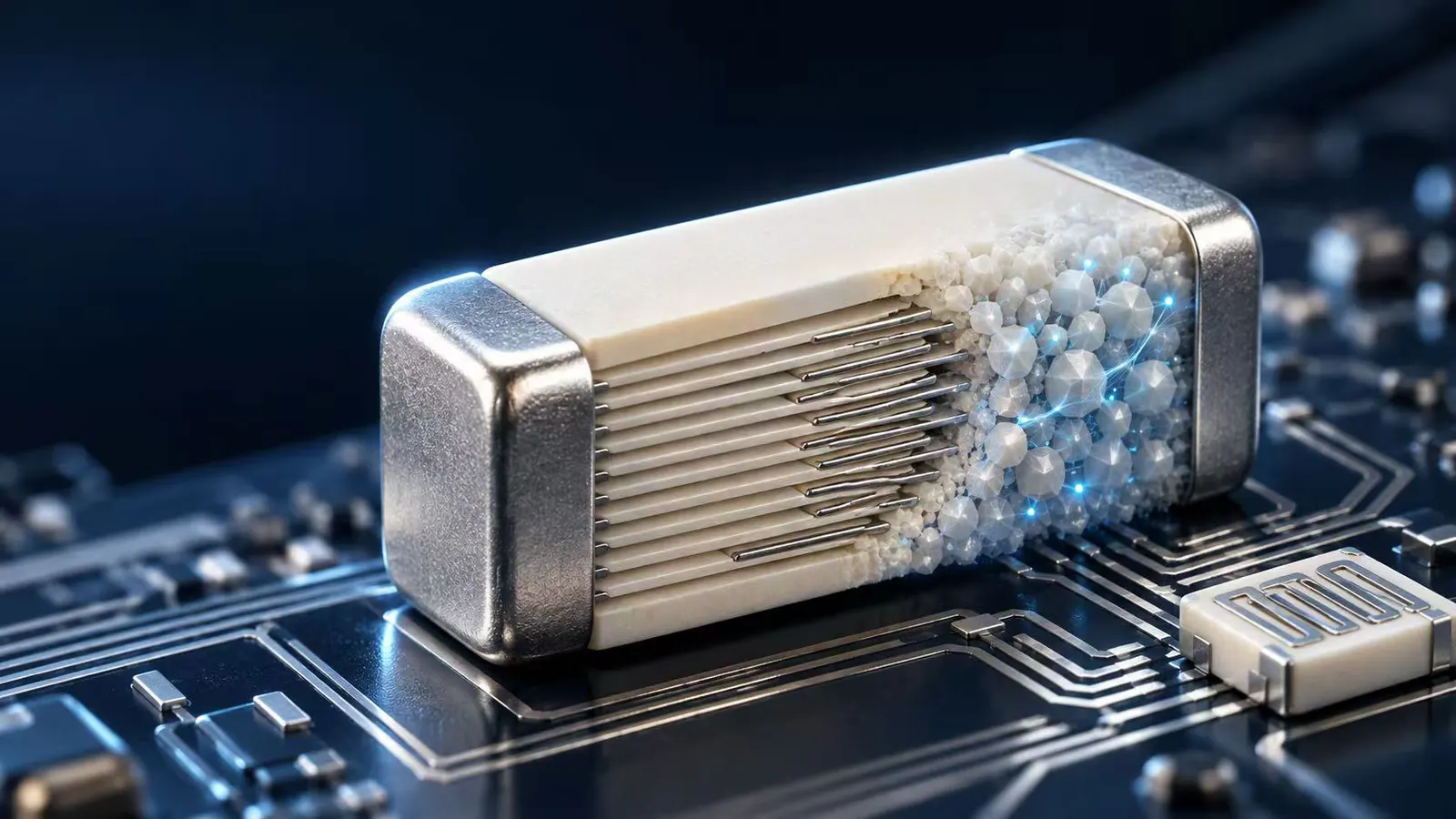
We investigate ceramics with tailored permittivity, low dielectric loss and stable temperature characteristics for capacitors, high-frequency circuits and microwave devices.
- Balancing high permittivity with low dielectric loss
- Temperature compensation and frequency stability
- Insulation resistance and dielectric strength
- Control of grain size, porosity and secondary phases
- Compatibility with electrodes and packaging processes
Potential applications include ceramic capacitors, resonators, filters and high-frequency electronic components.
Ferroelectric and Transparent Electro-Optic Ceramics
We investigate spontaneous polarisation, domain structures and electric-field responses, using composition design and processing control to tailor ferroelectric and electro-optic properties.
For transparent ceramics, research focuses on reducing optical scattering associated with pores, grain boundaries and secondary phases, while maintaining electro-optic response and operational stability.
Potential applications include capacitive components, optical modulation and information-processing devices. Development also considers reduced-temperature sintering and low-lead or lead-free compositions.
Gas-Sensing and Oxygen-Sensing Ceramics
We investigate surface adsorption, chemical reactions and charge transport to develop ceramic materials responsive to target gases. Active components, pore structures and surface chemistry are tailored to address:
- Sensitivity and selectivity
- Response and recovery times
- Operating temperature and power consumption
- Interference from humidity and other gases
- Long-term drift and resistance to contamination
Potential applications include industrial process monitoring, combustion control, environmental measurement and gas detection.
Humidity-Sensing Ceramics
We investigate moisture adsorption and desorption at porous ceramic surfaces and the resulting changes in electrical properties.
Pore size distribution, surface chemistry and sensing-layer architecture are optimised to improve response, repeatability and stability. Potential applications include building environmental monitoring, process control and storage-condition management.
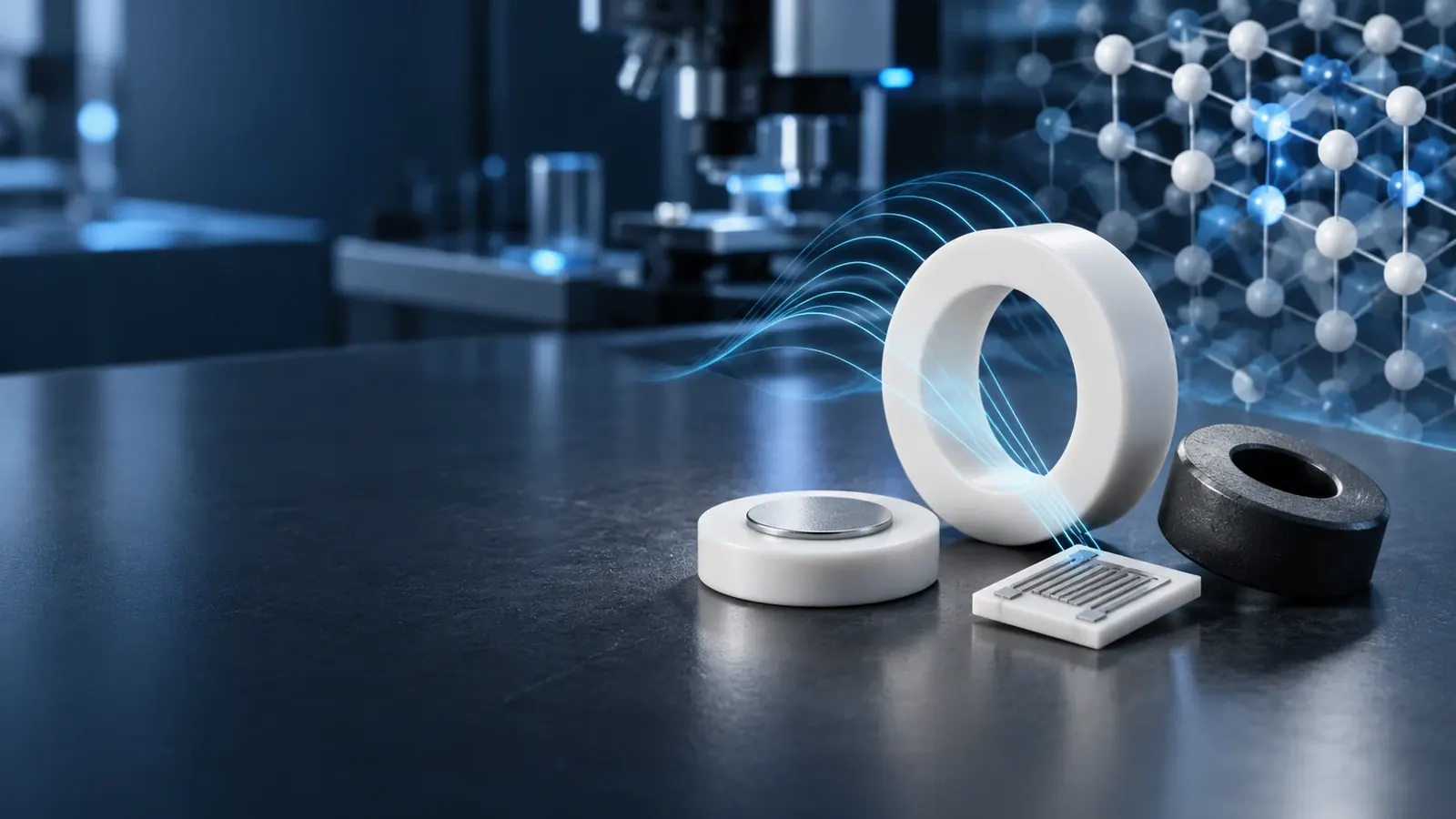
Ferrites and Magnetic Ceramics
We investigate composition, grain structure and sintering processes for soft magnetic, permanent magnetic and microwave ferrites.
Soft Magnetic Ferrites
Research focuses on permeability, saturation flux density, magnetic losses and temperature stability for magnetic cores, inductors and transformers.
Permanent Magnetic Ferrites
We examine how crystal orientation, forming and sintering affect magnetic performance, dimensional accuracy and manufacturing cost.
Microwave Ferrites
We investigate high-frequency magnetic response and loss mechanisms for potential use in isolators, circulators and phase shifters.
Bioceramics
We undertake materials research relevant to tissue repair, focusing on composition, pore architecture, surface properties and mechanical suitability.
Key areas include chemical stability, degradation behaviour and methods for evaluating biocompatibility. Application-specific validation provides a foundation for further development with specialist partners.